Booking with confidence - redesigning trust in beauty services
ROLE TIMELINE METHOD TOOLS
Product Designer 2 Weeks User Research, Wireframing Figma, Claude AI
Prototyping, User Testing
Luma is a conceptual beauty service booking platform designed to help cautious clients confidently discover and book qualified service providers. I led this project to explore why existing booking platforms often fail to build trust and reliability for users, and to design an experience that prioritises confidence, safety, and seamless appointment management.
Brief
Luma is a conceptual booking platform reimagining how people discover and connect with beauty service providers. While existing platforms optimise for speed and availability, many fail to address the confidence gap clients experience when choosing who to trust. This project set out to design a consumer-first experience that elevates credibility, transparency, and emotional reassurance across the booking journey. The result is a trust-led platform that helps users move from uncertainty to confident action.
Problem
For many clients, booking beauty services doesn’t just feel inconvenient — it feels uncertain. Early research revealed that users often hesitate to book appointments because they struggle to determine which providers are qualified, reliable, and aligned with their expectations, leading many to delay or avoid booking altogether. This problem matters because repeated negative experiences, such as last-minute cancellations or disappointing results, removes trust and make users increasingly cautious when choosing new providers. From a product perspective, when users lack confidence in the providers listed on a platform, booking hesitation increases and repeat usage declines.
Goals
Improve booking confidence and reduce anxiety
Reinforce reliability throughout the appointment lifecycle
Reduce friction across the booking journey
Discover
Market Research

As part of my research, I signed up to several existing booking platforms as a consumer to gain a first-hand understanding of the end-to-end user journey and overall experience. Experiencing the onboarding, discovery, and booking flows directly helped me better empathise with users and identify moments of friction, uncertainty, and trust breakdown.
Through this process, I began to uncover clear gaps and potential opportunity areas. However, rather than moving immediately into solution ideas, I first focused on defining the core user needs and problem space to ensure that any proposed solutions were grounded in real user challenges.
Ease of Entry Has a Direct Impact on Perceived Quality Users interpret complex onboarding as unnecessary friction, not professionalism. When users are forced to create accounts or verify information early, they don’t feel safer — they feel slowed down and less inclined to complete a booking.
Why this matters:
This supports the idea that trust must be earned before commitment is requested, not the other way around.
Existing Platforms Rely on Shallow Trust Signals Star ratings are treated as a proxy for trust, but they don’t answer the questions users actually have.
Users are left to infer safety, quality, and professionalism on their own — often outside the platform.
Why this matters:
This creates space for a platform like Luma to move beyond ratings and offer clearer, more meaningful trust signals.
User Research
As part of my research, I conducted social listening across platforms such as Reddit and TikTok, analysing conversations and widely discussed incidents involving hairstylists — ranging from last-minute cancellations and poor communication to unprofessional behaviour, unrealistic salon policies, and concerns around training and qualifications. Due to lack of availability I couldn’t conduct any user interviews however the discussions I came across on social media provided valuable insight into the real frustrations and anxieties clients experience when booking beauty services.
While reviewing this content, I focused on answering the following research questions:
Where do you go to find a good hairstylist?
What things do you look for in a hairstylist before booking them?
What are somethings that can put you off booking a hairstylist?
What makes a hairstylist trustworthy?
What part of the booking process feel annoying or stressful?
What do you wish you knew before booking a hairstylist?
Define
Data Collation & Synthesis
Following the data gathered from user research, I synthesised the findings into an affinity map to identify recurring patterns and insights. From this process, I prioritised the two most prominent themes that consistently emerged across the research.
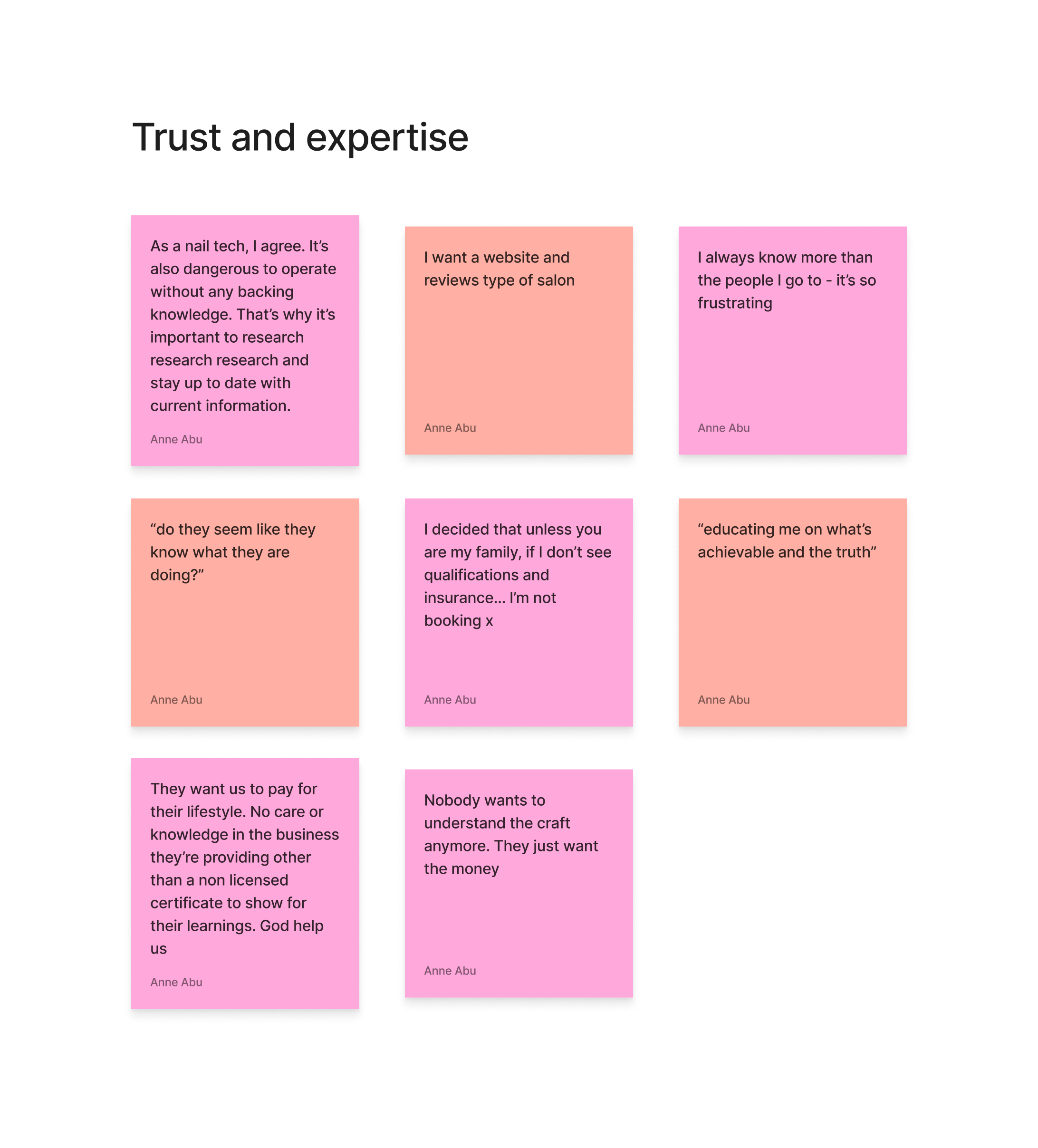
Clients no longer assume beauty service providers are qualified — they actively look for proof of competence, safety, and honesty before booking. This isn’t just about skill. It’s about risk, trust, and feeling safe in someone else’s hands. Why This Matters: Beauty services involve personal risk, and when qualifications or professionalism are not clearly visible, users feel uncertain about their decision. This uncertainty often leads to additional research or booking hesitation.
Defining the User & Their Problem
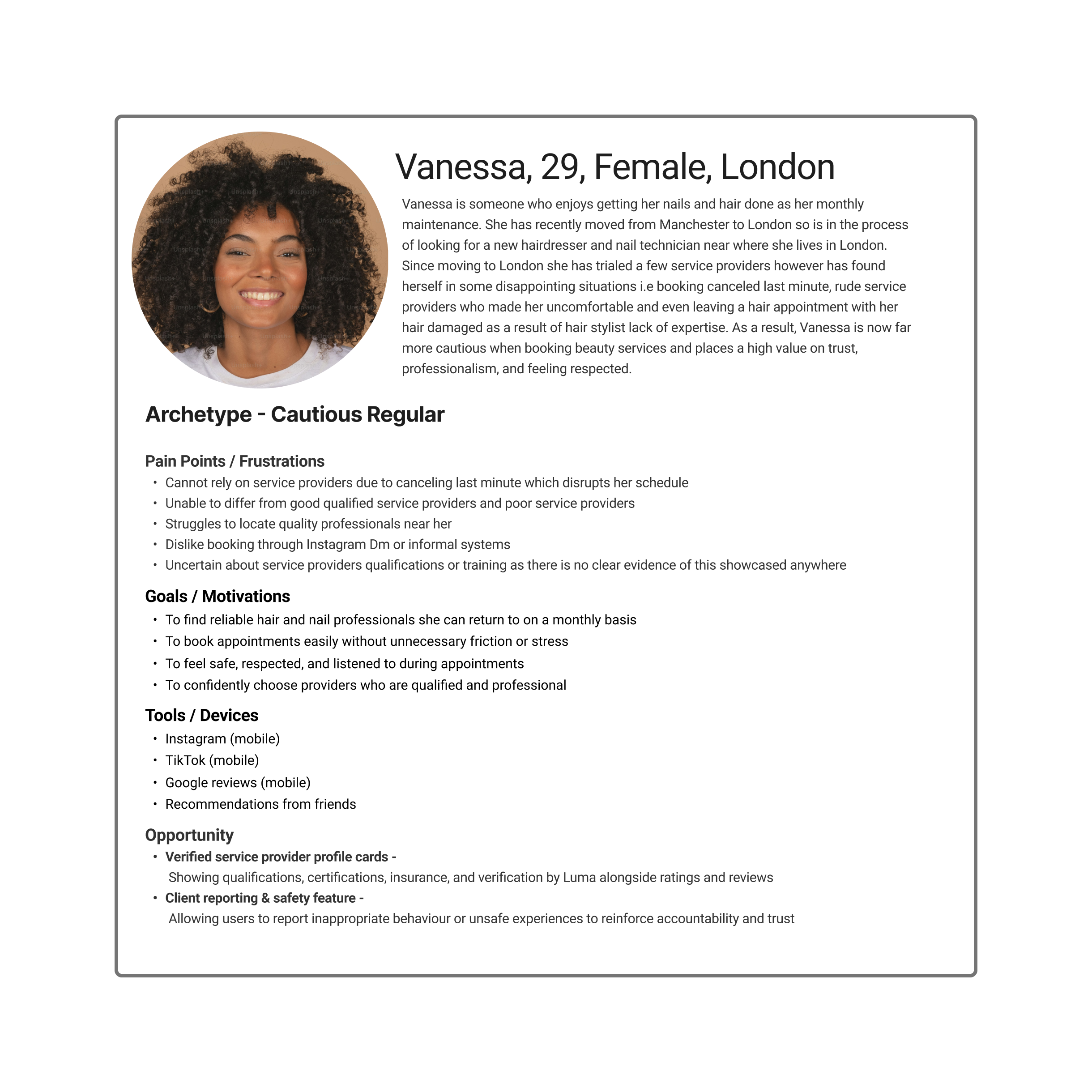
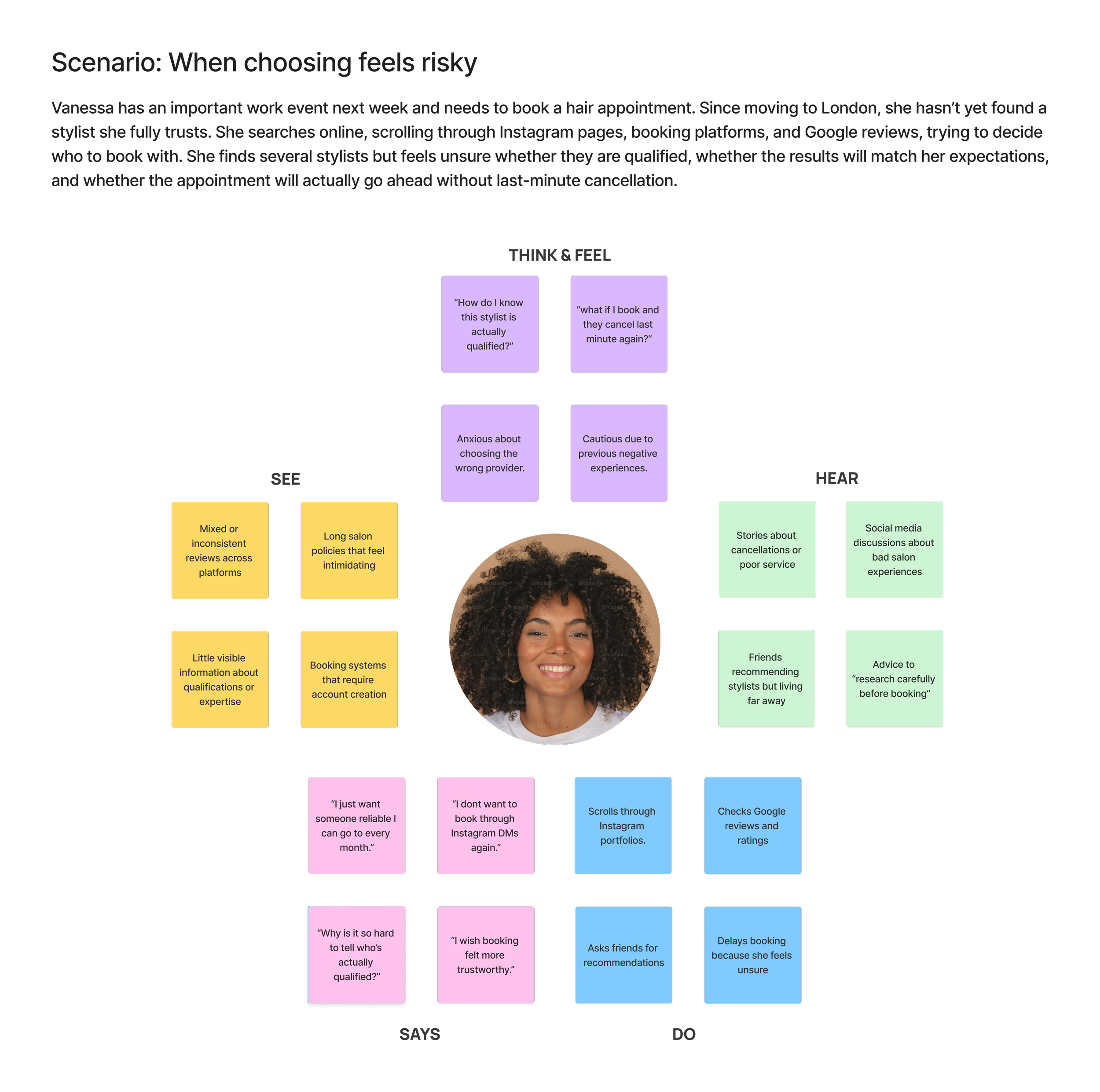
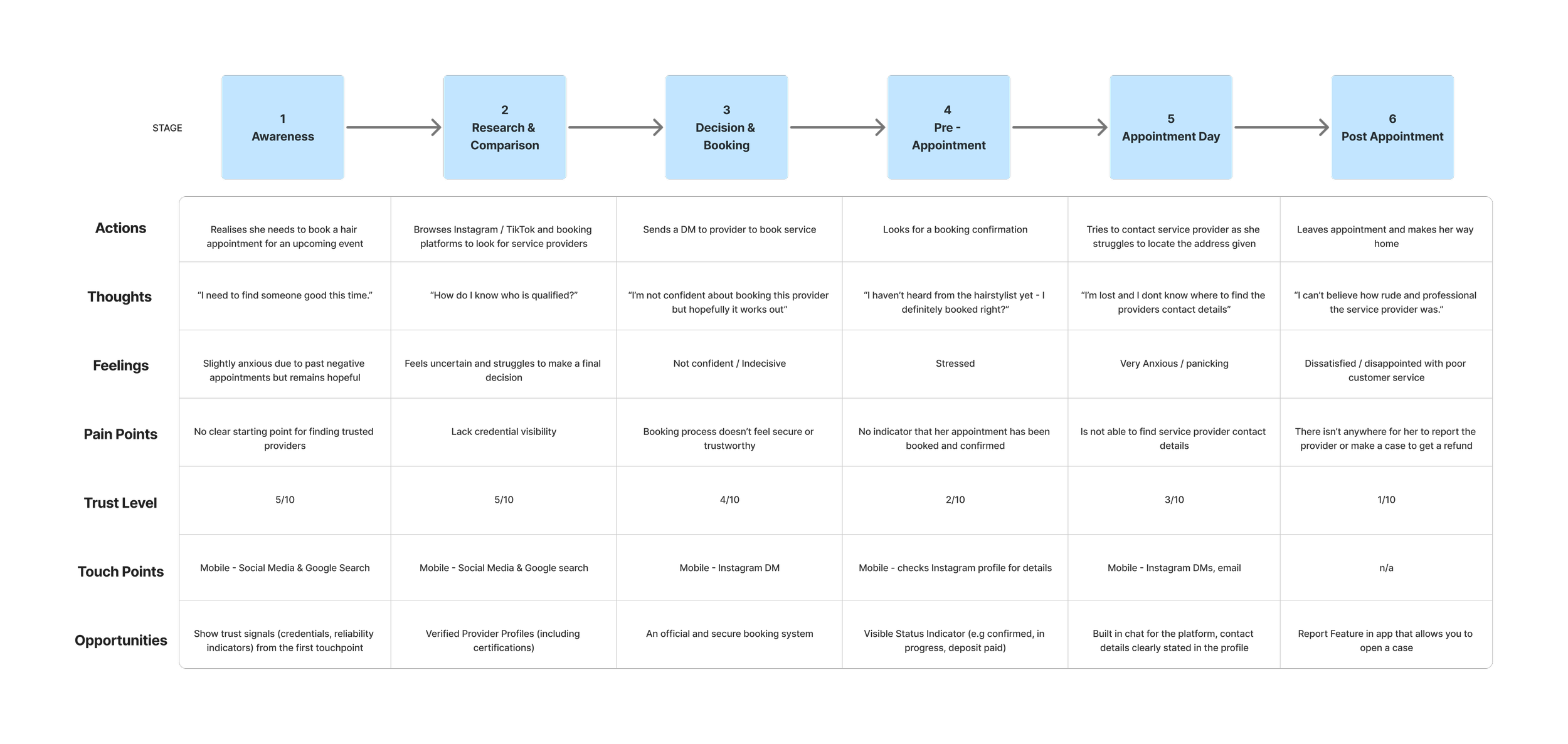
I then went on to create a persona, empathy map and experience map. These 3 UX artefacts helped me to better define my user and address their pain points and goals. It also helped gain better understanding of the problem and track their emotions and feelings throughout the user journey. The user story, problem statement and hypothesis helped me to take the place of the user and better understand how to respond to the users problem.
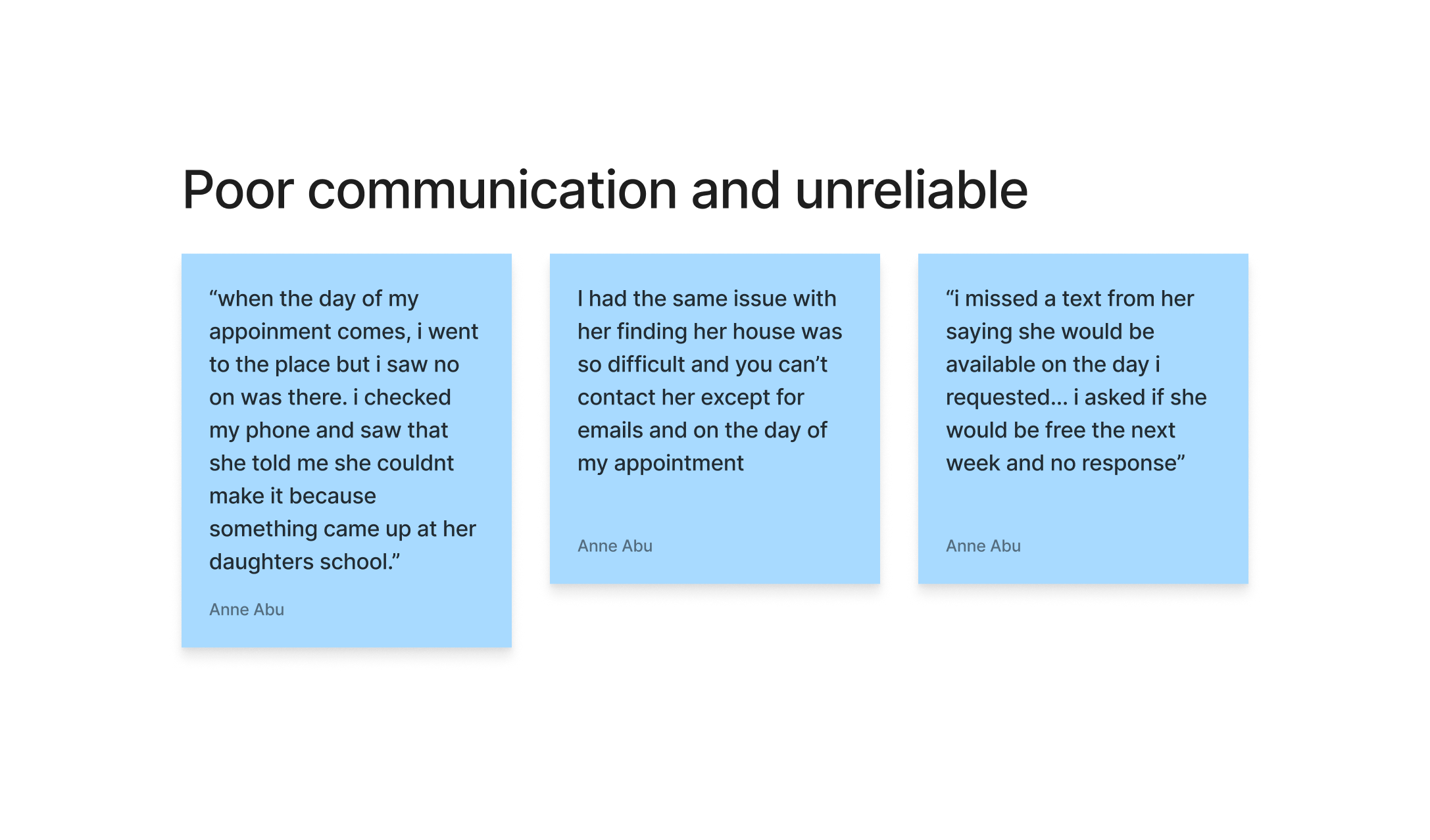
When communication is inconsistent or difficult, users interpret it as unreliability — even before a service is delivered. Why This Matters: When users experience this, uncertainty increases and trust begins to erode. This often leads to hesitation, repeated confirmation-seeking, or even booking abandonment.
There doesn’t seem to be any consequences for the service providers when they have provided a poor service or let a client down, which is even more frustrating for the client. Why This Matters: This matters because clients feel completely helpless and as result not only stop trusting service providers but also the platforms that host them.
User Story
As a cautious regular, I want to clearly see a provider’s qualifications, reviews, and experience so that I can confidently choose someone I trust and would be happy to return to.
As a cautious regular, I want reassurance that my appointment is confirmed and on track leading up to the appointment so that I don’t need to follow up manually.
As a cautious regular, I want to easily contact my service provider through the platform so that I can quickly resolve questions such as finding the location or clarifying details.
Lack of communication before appointment and after booking increases anxiety and reduces trust level. Users are not sure if the appointment they have made has even been acknowledge by the service provider nevertheless confirmed. Why This Matters: This matters because it means even before service is provided there is already a discomfort the client is experiencing and is entering the appointment with a bad perception of the service provider
Problem Statement
Cautious regular clients need a way to confidently identify and book qualified service providers, because users no longer assume provider competence and increasingly look for clear proof of training, certifications, and professionalism before committing to an appointment.
Hypothesis
We believe that introducing verified service provider profile cards for clients seeking trustworthy providers will increase booking confidence and platform trust. We will know this is true when we see an increase in completed bookings, repeat bookings, and overall user retention driven by higher trust in providers on the platform.
Ideation
Recommended Solutions
For this project, once I reached the ideation stage, the depth of the earlier research meant the problem and primary user needs were already clearly defined. This provided a strong foundation and allowed me to identify potential feature opportunities without needing to ideate from scratch. Instead, I focused on prioritising features based on how strongly they addressed core user needs and the impact they would have on improving the overall booking experience.
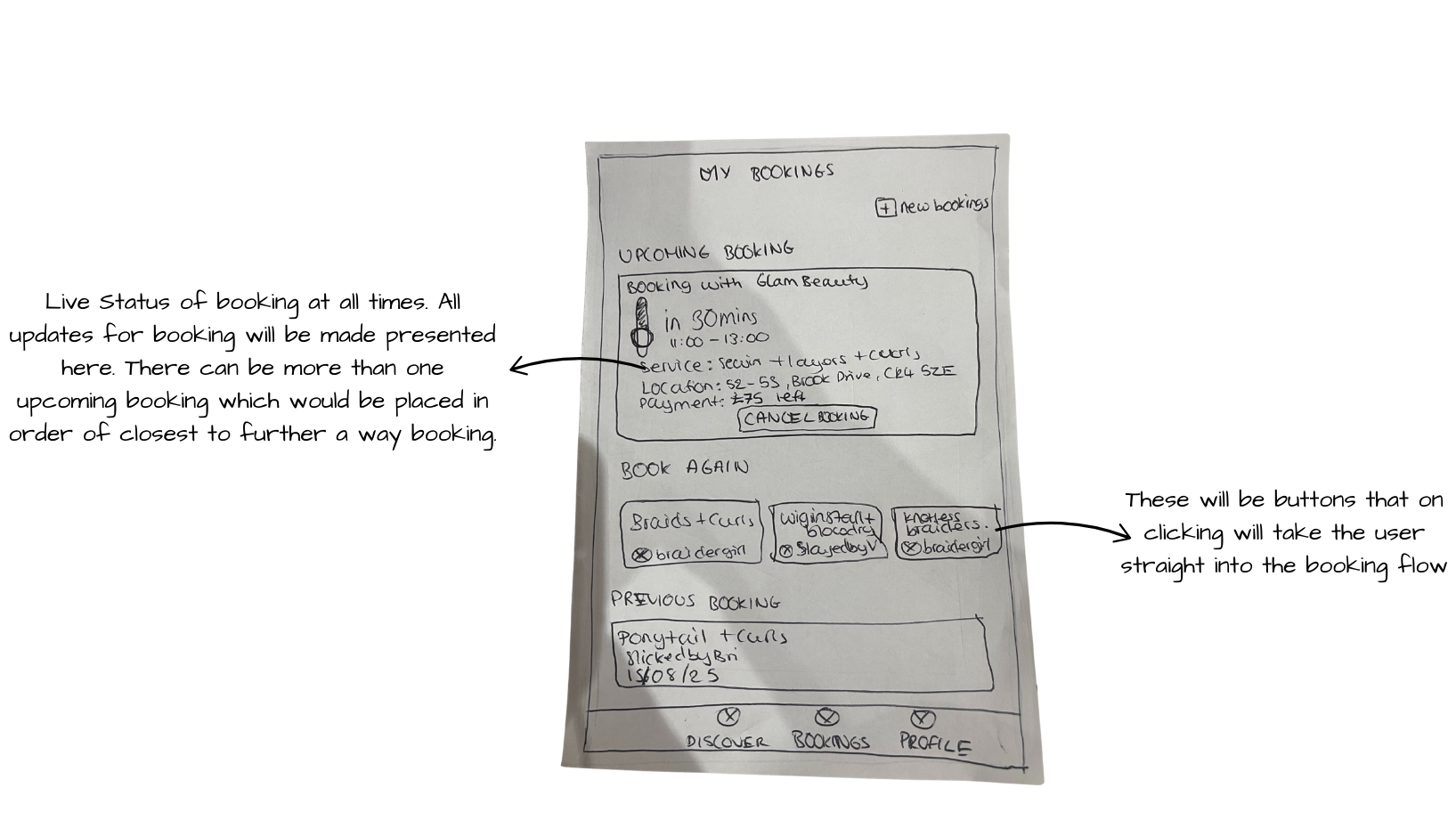
Feature 1: Appointment Tracking
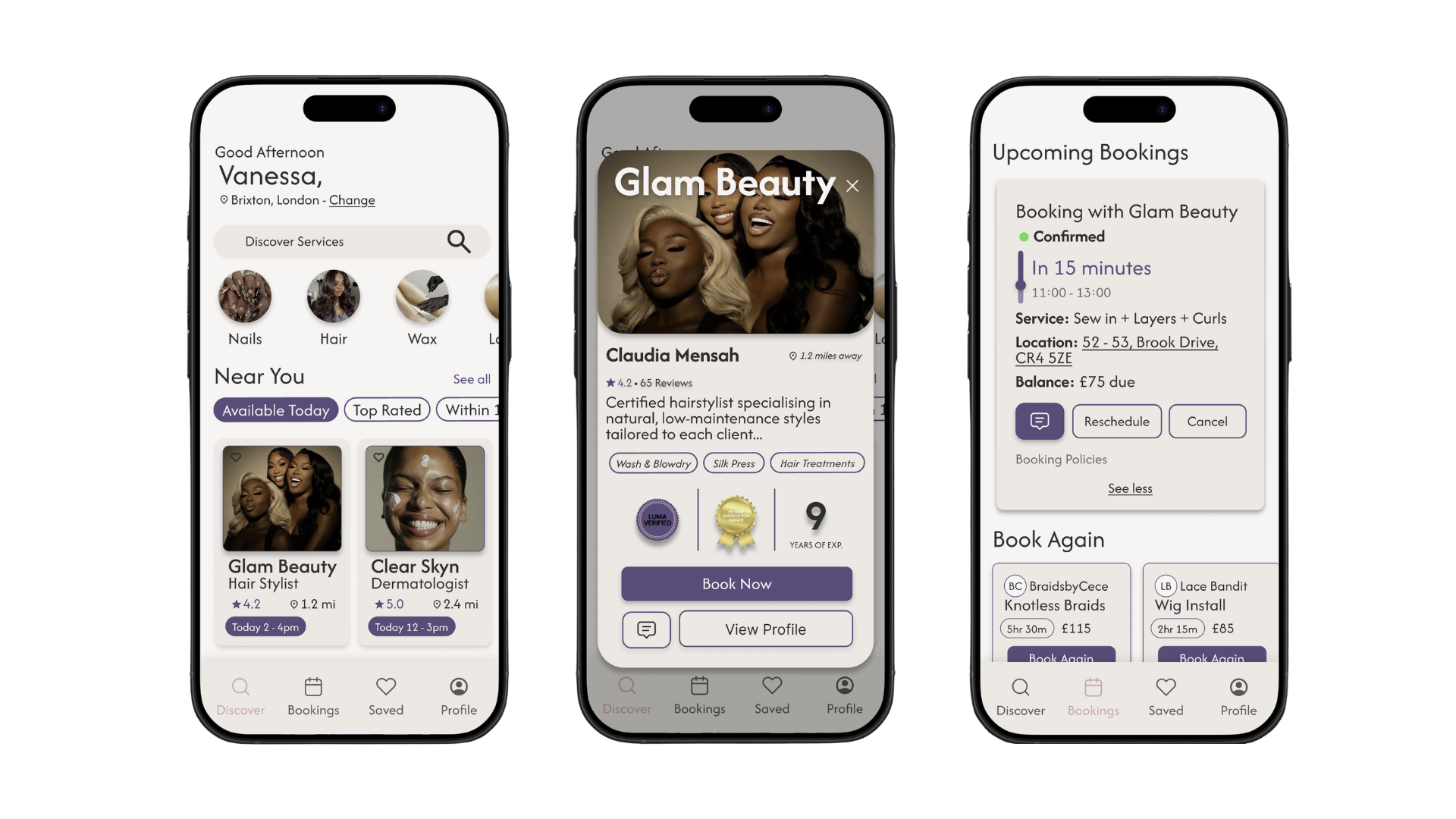
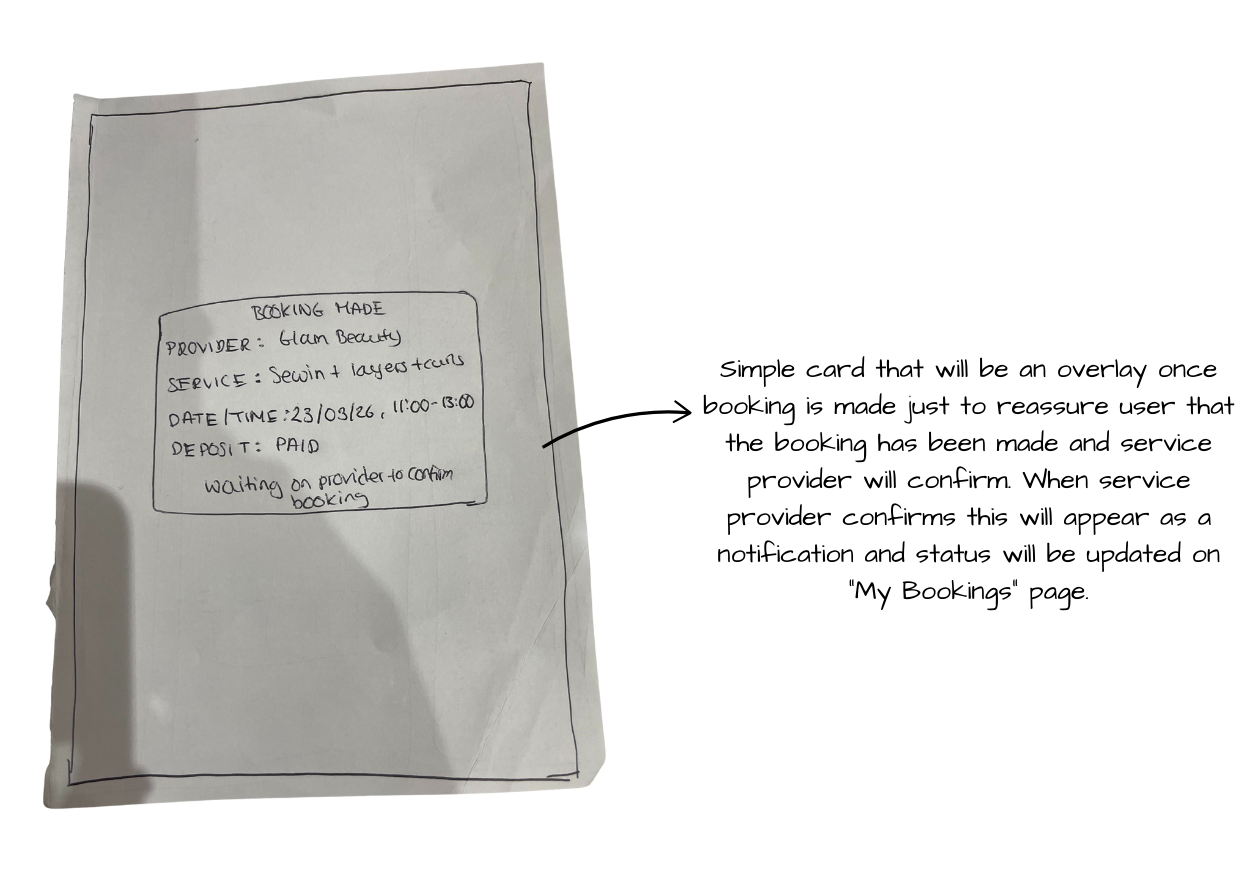
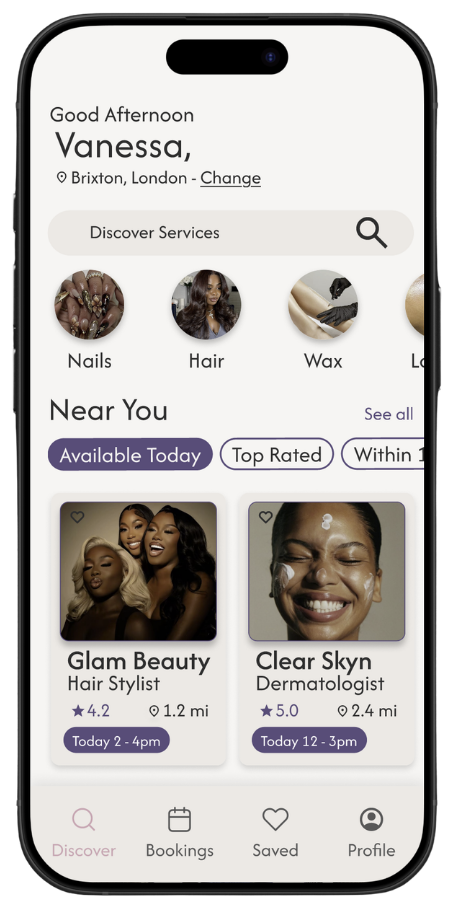
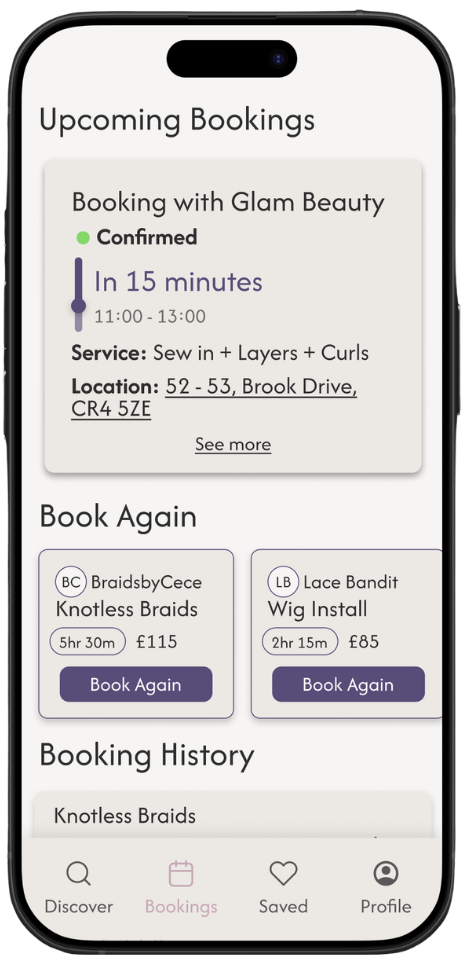
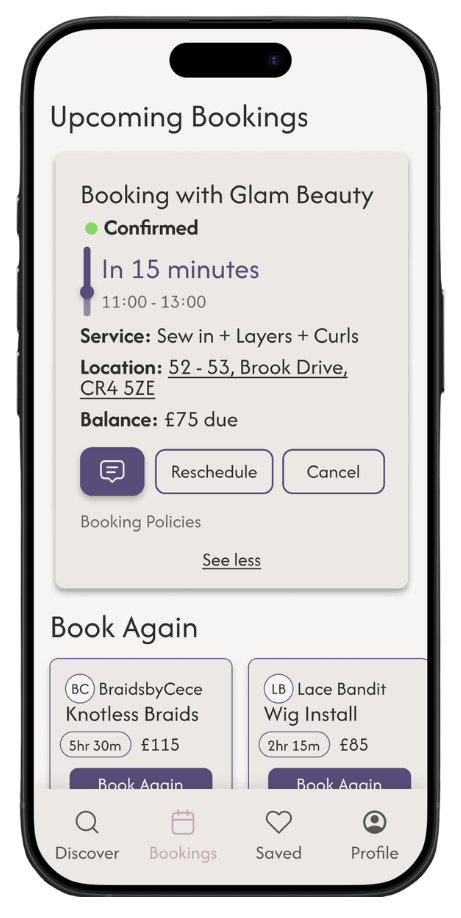
Users can check their booking status and any updates at any time within the “Bookings” section, while email and message notifications are sent upon confirmation to ensure users feel reassured and informed. Under “Upcoming Bookings” users are presented with a focused appointment view that surfaces the most relevant information at a glance, and then option to reveal extra details concerning appointment by clicking “see more” link. Live status updates, such as “30 minutes to your appointment,” alongside automatic reassurance email and message notifications will also be made available. This will help users feel informed and confident throughout the experience.
Accessibility Considerations: I simplified information density by introducing clear visual hierarchy, chunked content into digestible sections. Progressive disclosure allowed users to access deeper provider details when needed, rather than overwhelming them upfront.
Feature 2: Service Provider Profile Card
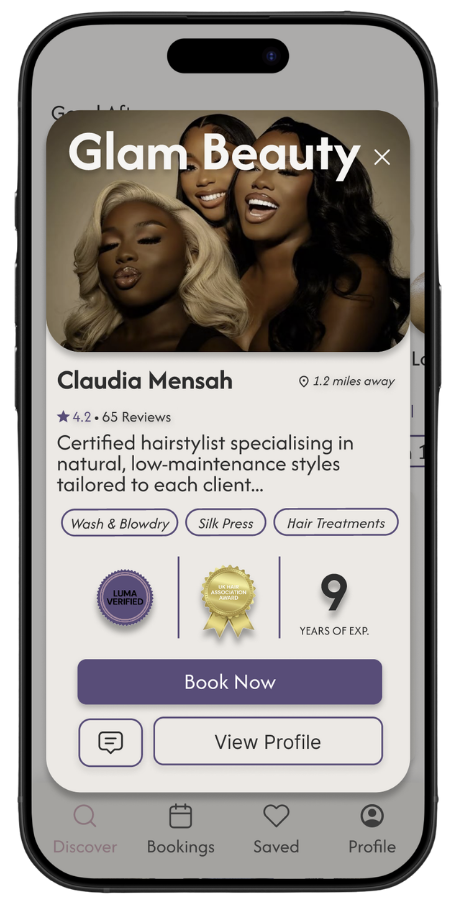
To strengthen trust before booking, each provider profile clearly displays key credibility indicators, including certifications, training history, and insurance status. Once credentials have been reviewed, a “Verified by Luma” marker is shown on the profile, helping users quickly recognise qualified professionals.
Accessibility Considerations: I made sure trust badges and ratings were supported by icons and labels to avoid relying on colour alone to communicate meaning, ensuring clarity for users with visual impairments or colour vision deficiencies.
Develop
Time to Bring it to Life!
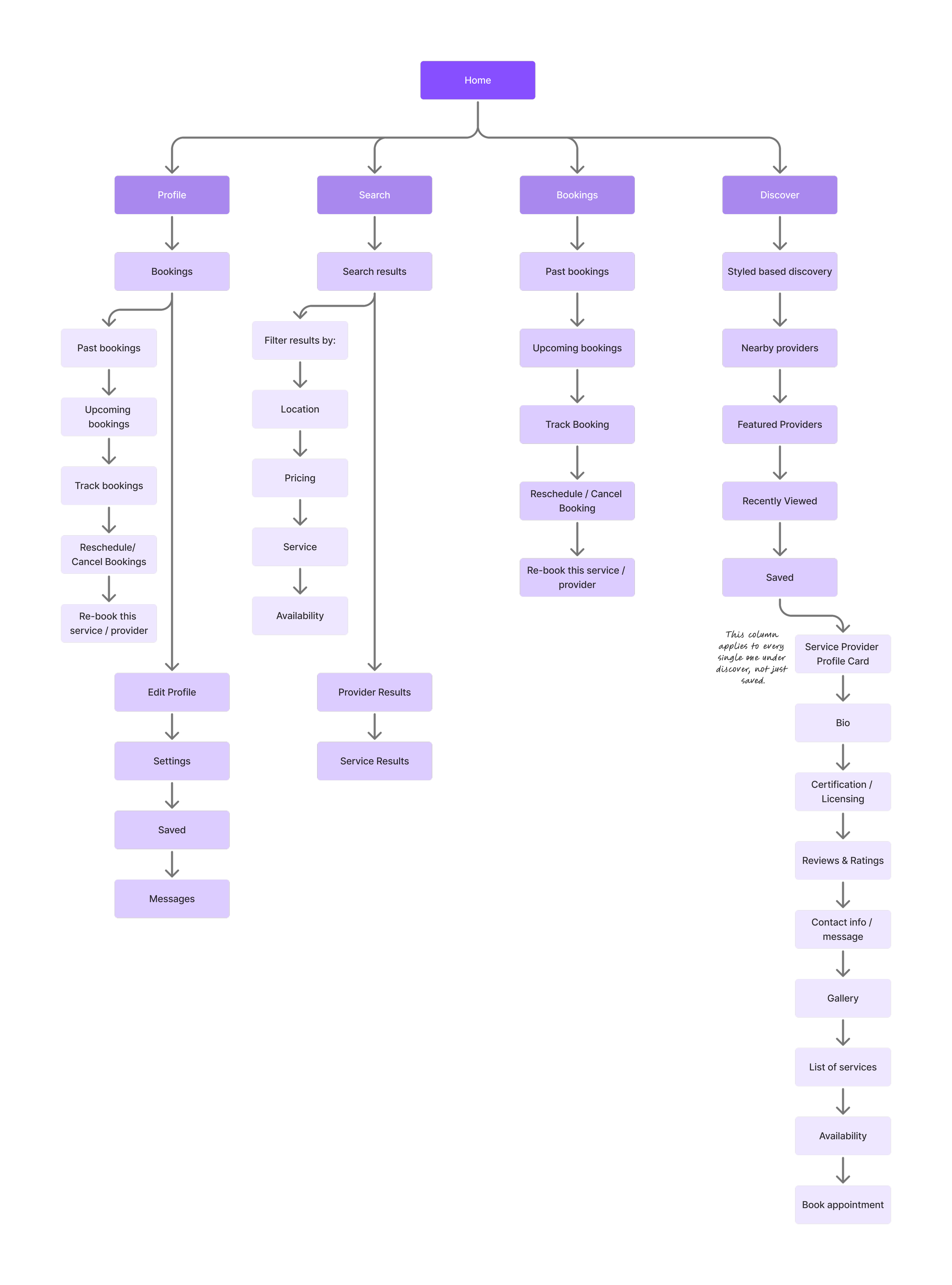
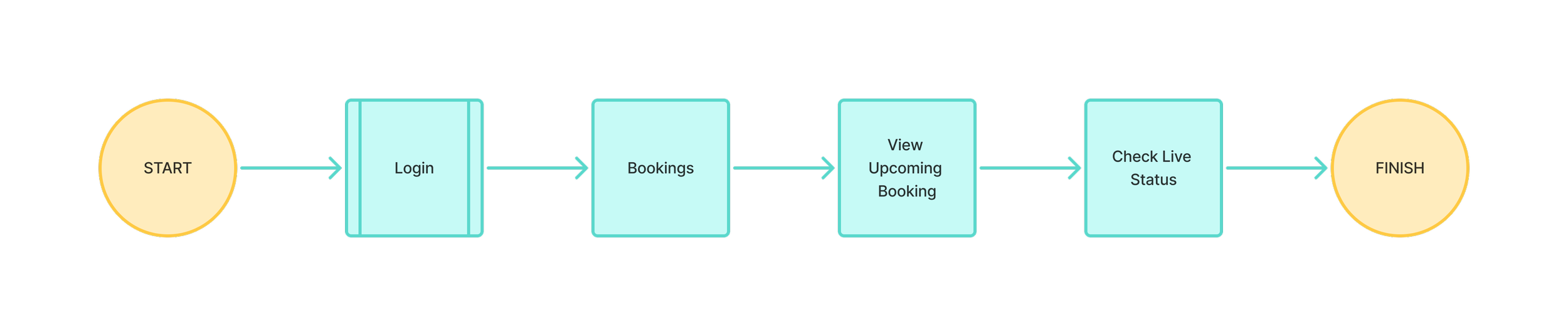
At this stage of the process my focus was on information architecture I started to think about how the user would navigate the platform and where the different screens should be placed within the platform and how they would relate to each other. To help me gain better understanding of this I created a sitemap. This allowed me to identify where each feature would sit within the platform and how it would be accessed. I then went on to create user flows which helped me to identify each step that needed to be taken to complete a desirable action. This then informed the wireframes created.
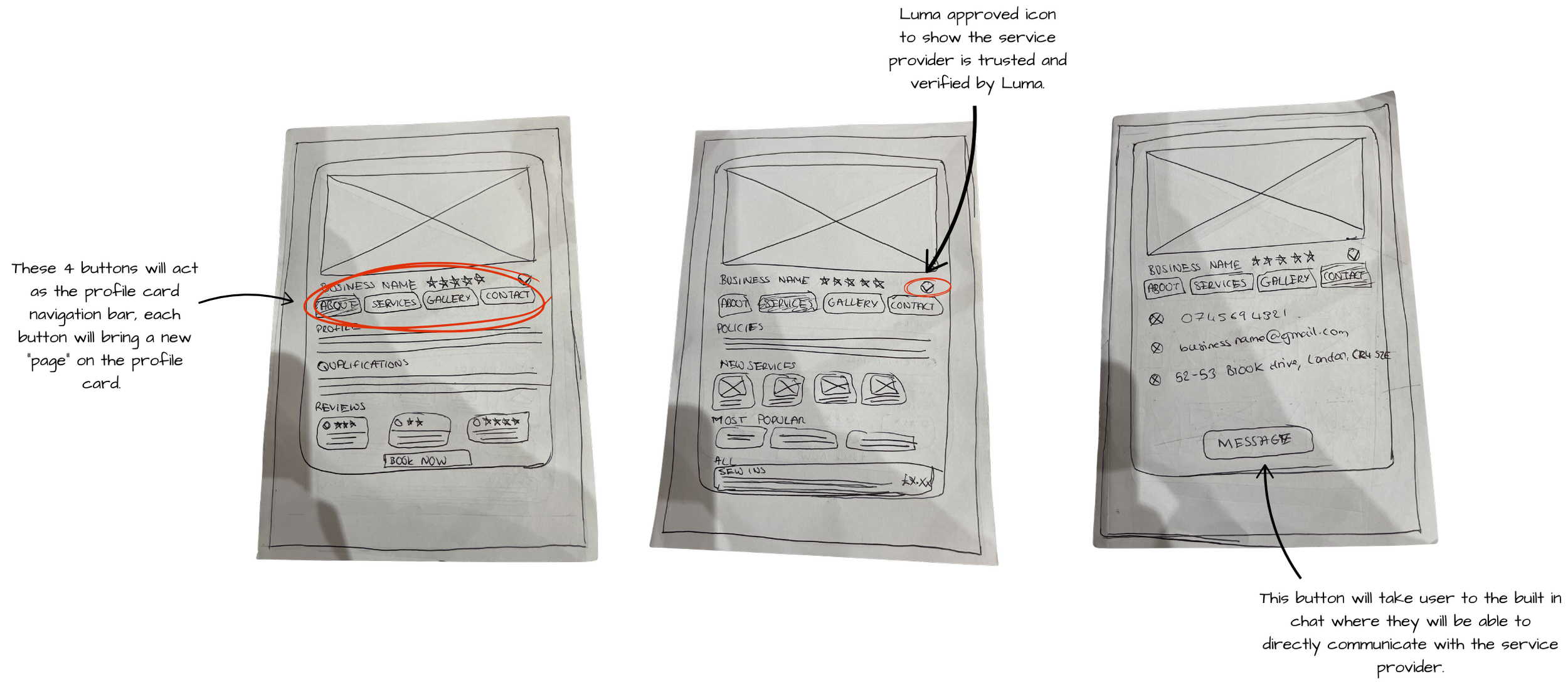
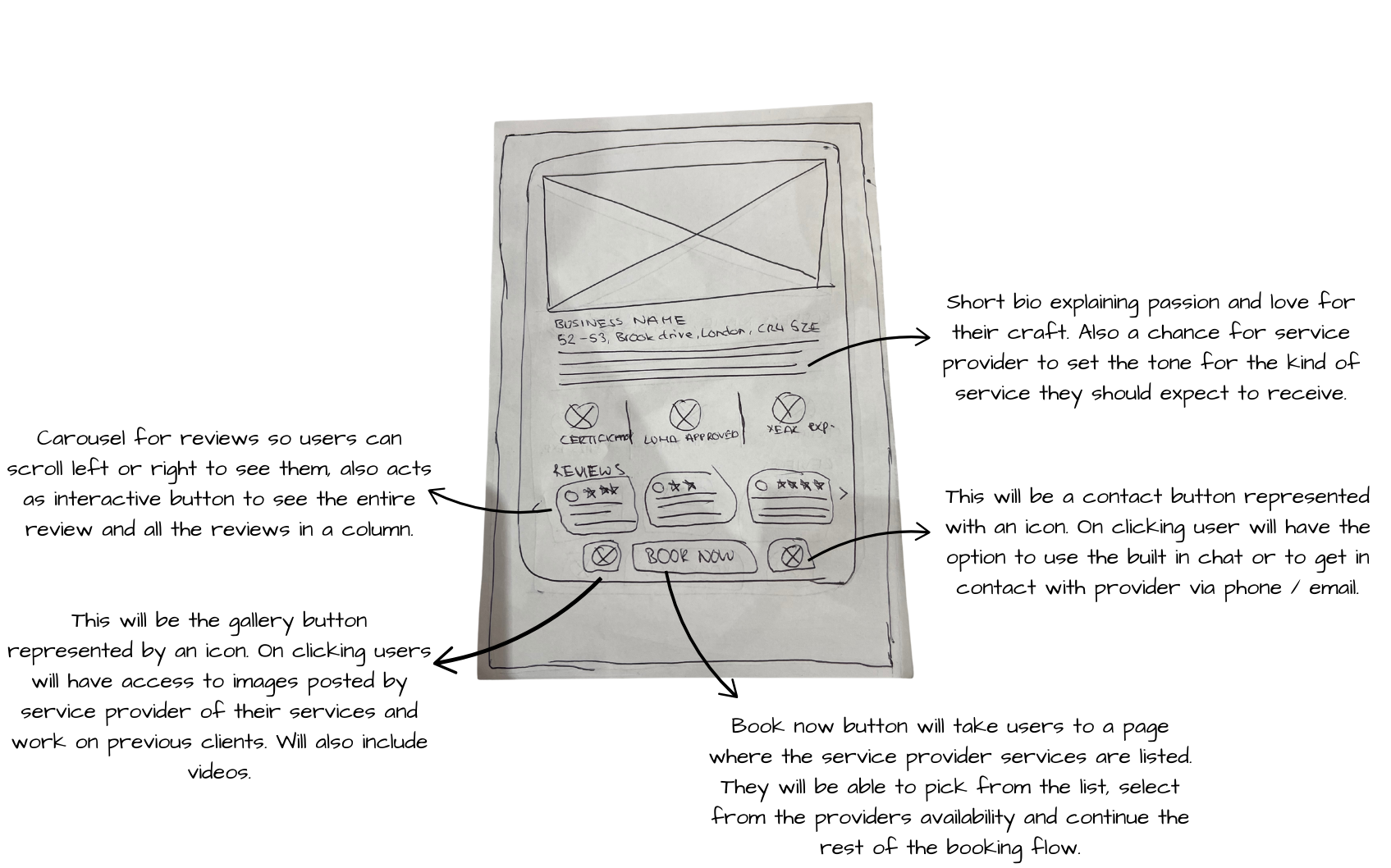
I initially sketched Option 1, but found the layout visually dense for a profile card and required too much interaction from the user. To improve clarity, I sketched other versions of the profile card and ultimately selected Option 2, which presents the same information in a more concise, accessible format, reducing cognitive effort for users while maintaining informational depth.

Deliver
Time to Put it to the Test.
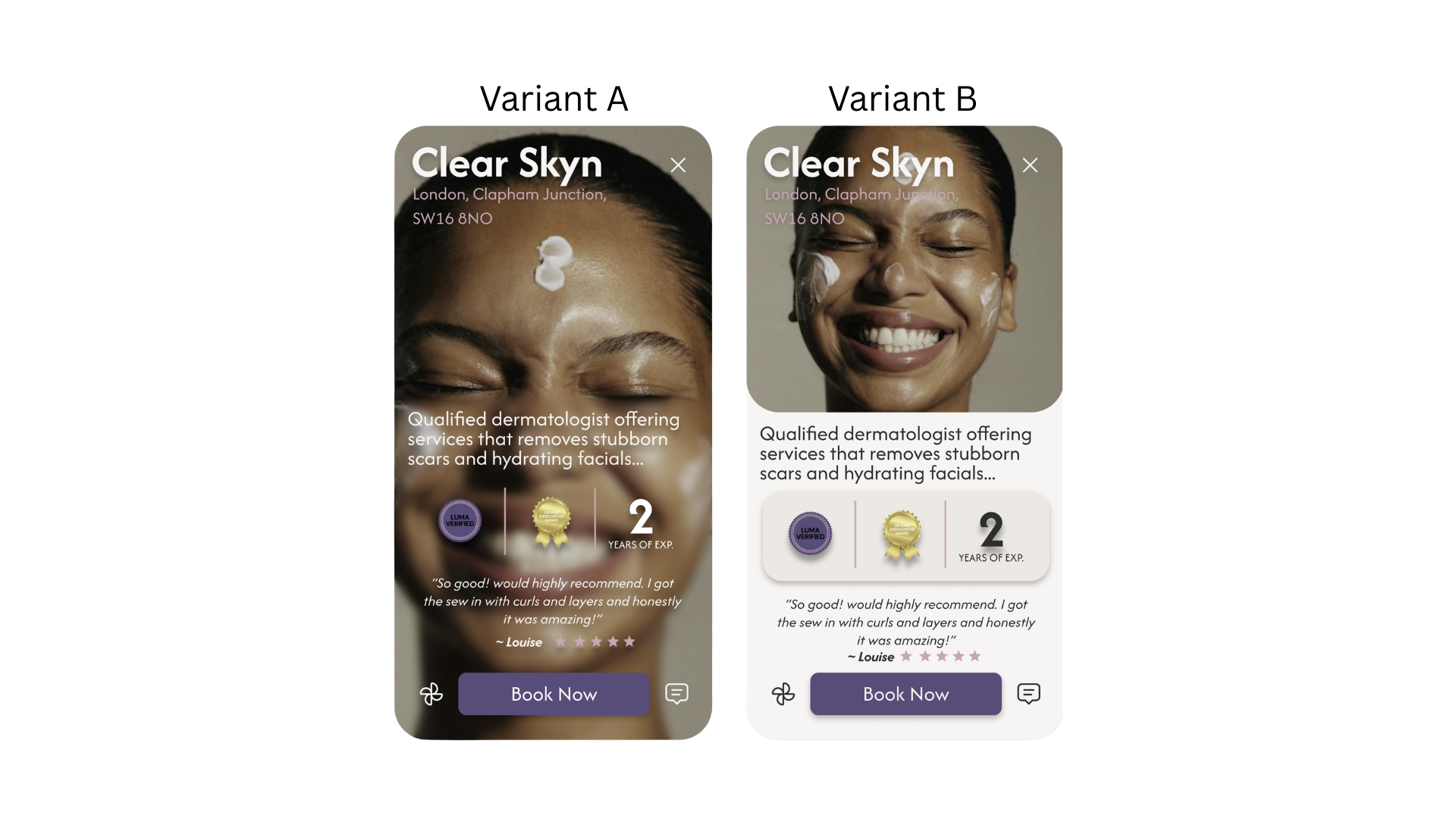
For this project, I conducted user testing across both core features. For the service provider profile cards specifically, I implemented A/B testing to evaluate different layout approaches. Given the many possible ways a profile card could be structured, this method allowed me to identify which variation best supported clarity, trust, and booking intent for this platform.
A/B Testing
To determine which profile card layout better supports confident decision-making and encourages bookings, I conducted an A/B test comparing two interface variations. Both versions contained the same provider information—qualifications, reviews, experience, and booking CTA—but differed in visual hierarchy and information density.
Hypothesis
I went into this test expecting Variant B to perform better. The content-first layout felt more structured, the information hierarchy clearer, and the credential panel easier to process at a glance. My assumption was that separating the image from the supporting details would reduce cognitive load and give users a faster, more confident path to booking.
Objective
Identify which layout drives stronger booking intent
Measure which design communicates provider credibility more clearly
Evaluate which interface users could interpret most quickly at a glance
Test Setup
I used a repeated measures approach — the same group of users tested both variants, giving direct comparison data rather than group averages.
Variant A — Image-led layout with supporting details overlaid or beneath.
Variant B — Content-first layout with clear separation between image and information, structured credential panel, and scannable service tags.
Users worked through a prototype task: review a provider profile and decide whether to proceed with booking.
Success Metrics
Book Now click-through rate
Time to locate key provider information
Self-reported clarity and trust perception
Analysis & Outcome
The findings supported my initial hypothesis. 66% of users preferred Variant B — the content-first layout I had predicted would perform stronger. Users consistently responded to its structured hierarchy, locating credentials, services and trust signals faster and with less effort. Variant A, despite its visual appeal, was described as harder to scan and slower to build confidence.
The insight reinforced how confidence built through layout matters more than visual impact. Users don't linger — they scan, assess and decide in seconds. Variant B gave them the structure to do exactly that.
What This Informed
The results informed the iterations that I made for the final prototype — separate service pills for scanability, an aggregate rating over individual quotes, a clear CTA hierarchy, and a credential panel that earns attention rather than competes for it.
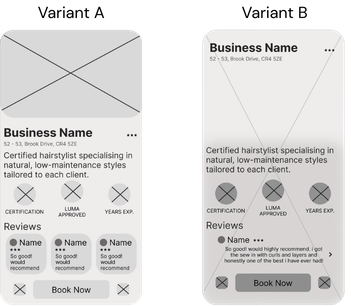
*Service Provider Profile Cards Mid - Fi Wireframe*
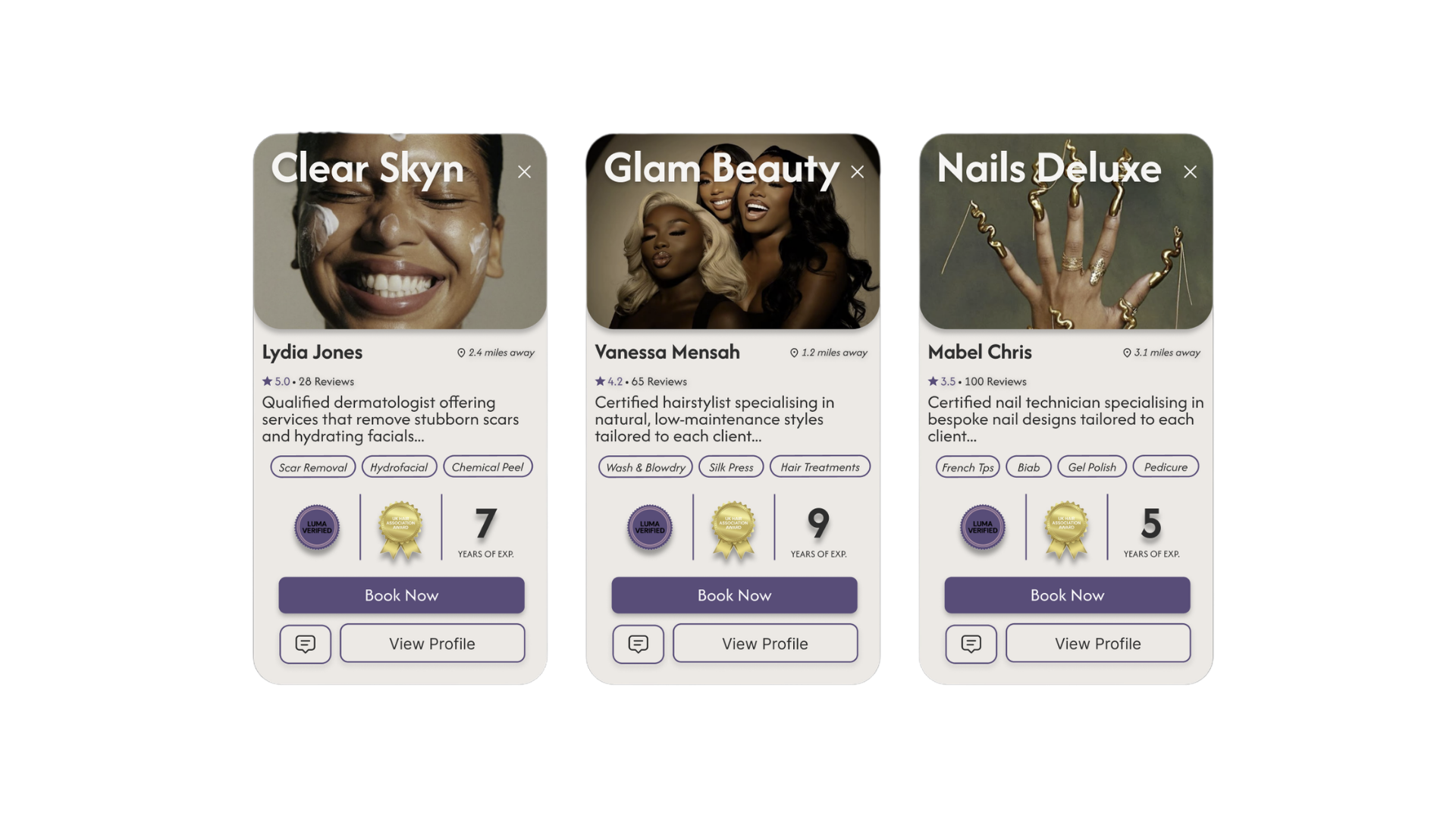
*Service Provider Profile Cards Final Prototype*
Design Rationale
Trade Offs & Design Decisions
1. Personalisation vs Scalability
I considered creating highly personalised provider profiles with flexible layouts and unique styling to reinforce individuality. However, this would introduce inconsistency, increase development complexity, and reduce scalability within a future design system. Instead, I designed modular profile components with structured, reusable layouts that allowed content variation within a consistent framework. This preserved a sense of personalisation while maintaining clarity, predictability, and scalability.
2. Information Depth vs Clarity
To build user trust, I considered including extensive provider and booking details upfront. However, displaying too much information increased cognitive load and slowed decision-making. I prioritised strong hierarchy and progressive disclosure, allowing users to access deeper details when needed while maintaining a clean, scannable layout.
3. Reassurance vs Performance Data
Early concepts explored adding dashboard widgets such as spending overviews, and activity trend charts to increase engagement. However, testing showed users prioritised clarity around upcoming appointments over behavioural metrics. I therefore focused on the appointment tracking feature where users could view the status of their bookings and have access to the provider details, to reinforce confidence and reduce cognitive load. The structure still allows future integration of insights like loyalty progress, but without compromising the platform’s reassurance-led experience.
Final Prototype
Reflection
My Final Thoughts…
Possible Impact if Luma was brought to life
If brought to life, Luma could shift beauty service booking toward a confidence-led marketplace, where trust, professionalism, and reliability drive user decisions. By making provider qualifications, credibility, and appointment status more visible, the platform could reduce booking anxiety and enable more informed choices. Over time, this approach could help raise industry standards by rewarding professionals who prioritise transparency, skill, and consistent service quality.
What I Learnt
This project reinforced how impactful testing can be throughout the design process. Conducting A/B testing demonstrated how comparing interface variations provides clear evidence for selecting the most effective design direction. It also highlighted the importance of prioritising real user feedback, reminding me that design decisions should be informed by user insights rather than assumptions.
What I would do differently
If I were to approach this project again, I would complement social listening with user interviews to gather deeper, more targeted insights. While analysing comments and discussions provided valuable context around user frustrations, direct conversations with participants would have enabled more specific responses to key research questions and strengthened the overall findings.
How this project strengthened my skills as a Product Designer
This project significantly strengthened my UX and product thinking skills, particularly through conducting a thorough research process that made defining the user and their core problem more focused and intentional. It was also my first experience running A/B testing, allowing me to develop a new skill that I plan to continue refining in future projects. Most importantly, the project deepened my understanding of empathy in design, reinforcing the importance of designing with a clear awareness of users’ emotions, motivations, and real-world experiences. This project also enhanced my ability to evaluate user needs alongside technical considerations, make intentional trade-offs, and confidently justify design decisions grounded in research and product objectives.
BeLingual
Role: Product designer
Product: BeLingual is a language learning platform that not only improves learning for students but streamlines duties for teachers.
Duration: 4 weeks
Tools: Figma
View Next…